Starlight, Starlings, and Small Hands
How paint, paper, and toothbrushes came together to create a metaphor for inclusion, wrapped in a winter night sky
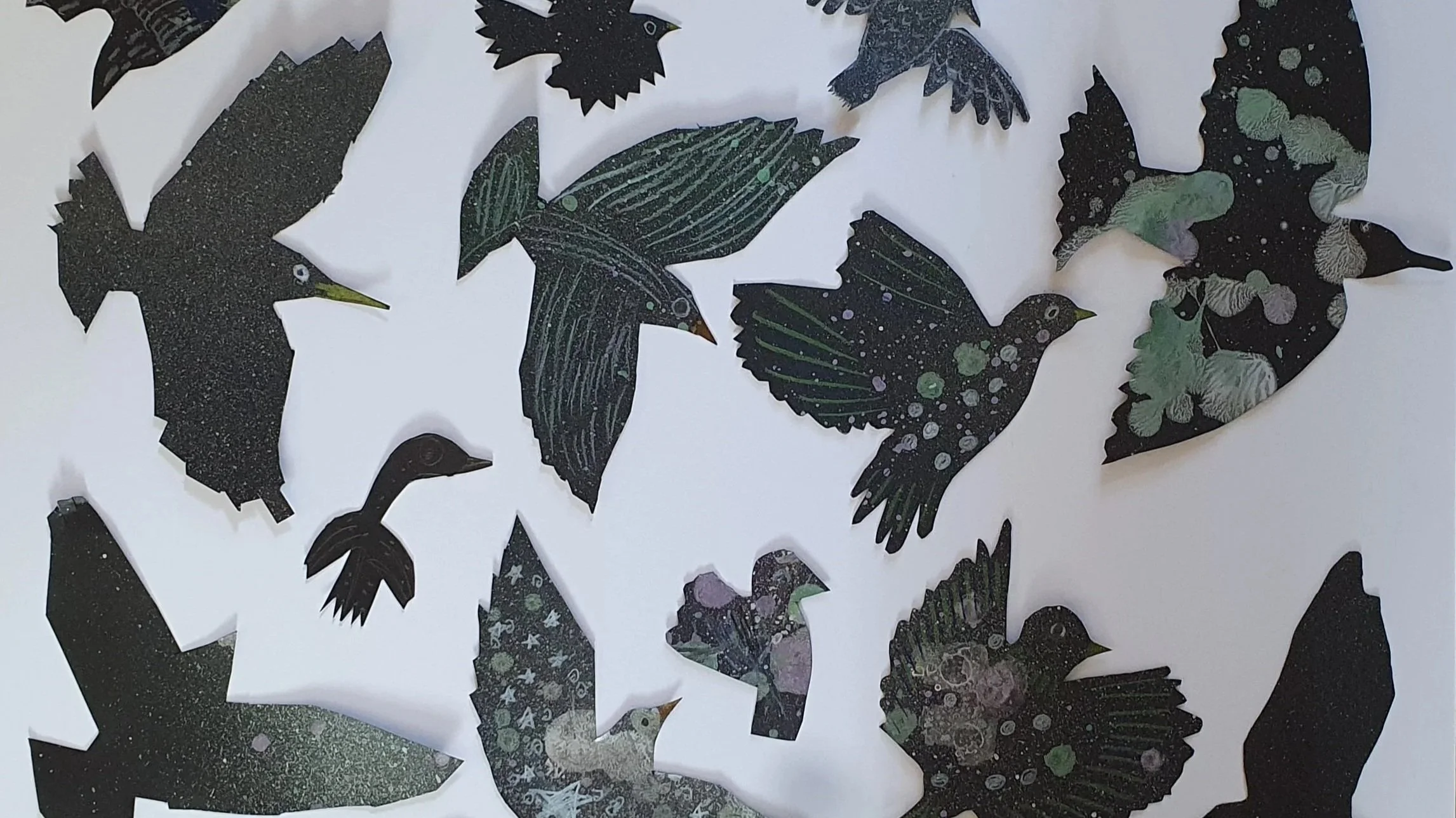
Paper starlings made by pupils in year 4 & 5.
Working in collaboration with the Museum of Zoology in Cambridge, I had the joy of visiting two North Cambridge primary schools to run a workshop themed around winter wildlife. Stepping into the classrooms I was immediately reminded of how naturally curious children are about the world around them, especially the hidden lives of animals that share our city. The room was thick with tangible excitement and I could feel the rapport already built by the Museum of Zoology through their outreach visits.
We chose starlings as our focus for many reasons: their ubiquity across Cambridge, their shifting presence through the seasons, and their quiet, often overlooked beauty. Starlings are everywhere and nowhere at once, so familiar that we sometimes stop seeing them properly. Yet when they move together as a murmuration, they become breathtaking. It felt like the perfect symbol for winter wildlife but it became so much more.
“Starlings are everywhere and nowhere at once, so familiar that we sometimes stop seeing them properly.”
Using metallic paint, black card, and toothbrushes, we created iridescent, star-flecked paper that shimmered like starling feathers and reminded us of the night sky. The children then cut this paper into the shapes of starlings. Some chose to work from templates, some from photographs, and others entirely from imagination. There was no “right” way to make a bird, only their way. Each starling was completely unique: spiky, quirky, tiny, bold, careful, chaotic. And every single one mattered.
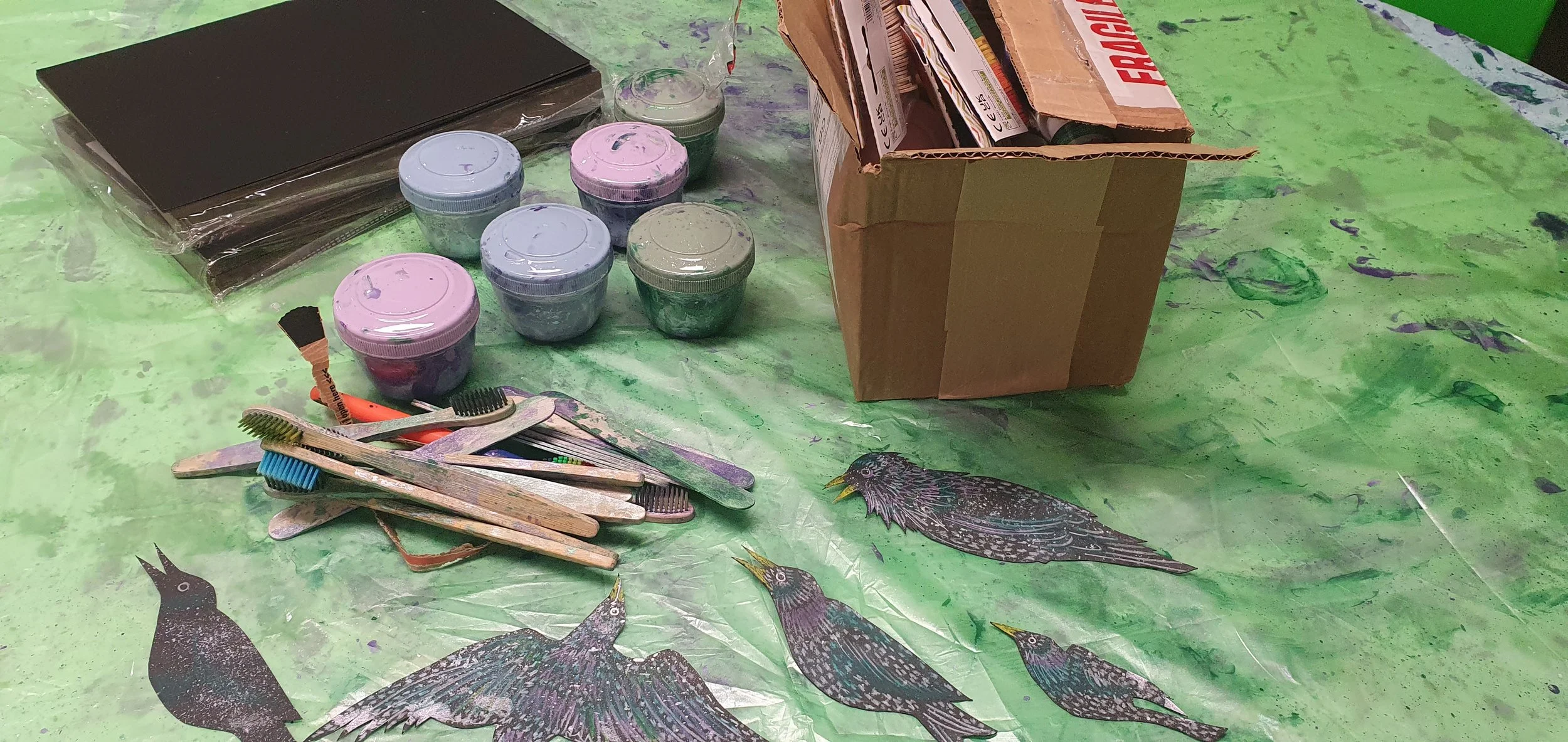
Materials used in the workshop: black card, metallic paint and toothbrushes.
Sorting through the birds after the workshops I couldn’t keep the smile from my face. Each bird surprised and delighted me, either for its thoughtful decoration, it’s energetic shape or its unique personality. Later, I installed the finished flock as a swirling murmuration in the museum’s Whale Room. As I worked, something unexpected and quietly moving happened. Without forcing or re-shaping anything, every bird seemed to find its place. No matter the size or shape, each one fitted into the flow as if it had always belonged there. The whole piece came together like a puzzle, one made not from uniformity, but from difference.
“The whole piece came together like a puzzle, one made not from uniformity, but from difference.”
Nature has a powerful way of bringing us together like this. The children came from different schools, backgrounds, and experiences, yet they were united by a shared process and purpose and, hopefully, a newfound fascination with a native species. A starling doesn’t judge who we are or where we come from, it belongs to everyone and no one at once. In choosing starlings as our subject, the workshops became less about individual skill and more about shared observation, wonder, and making side by side.
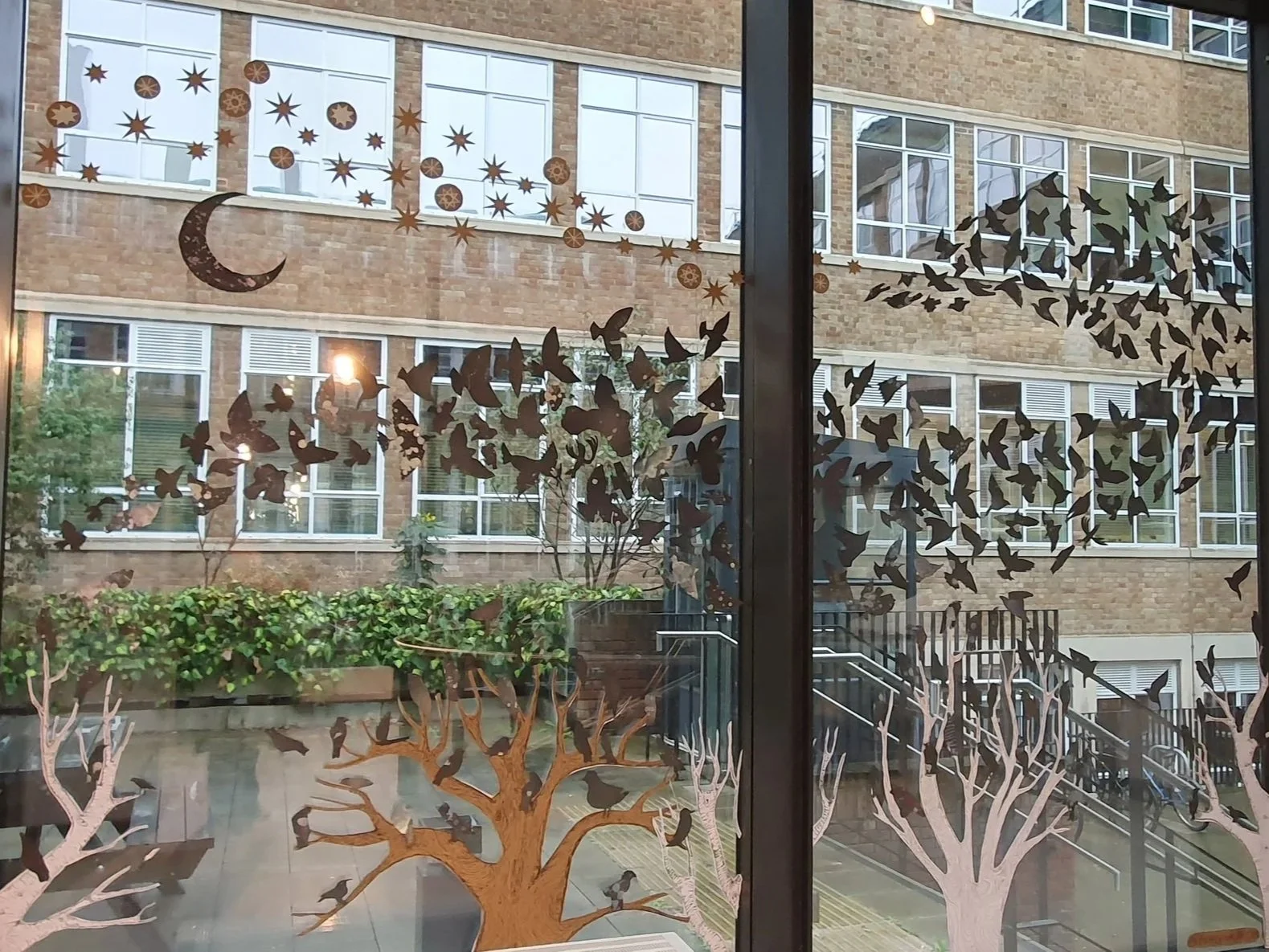
The final installation in the Whale room in the Cambridge University Museum of Zoology.
While working on this project I found myself experiencing winter through the eyes of a child - seeing the wonder and magic in the everyday. This sense of magic and wonder I gained from working with the children infused itself into the final installation. When we look outward, towards birds, seasons, and skies we begin to see ourselves as part of something wider. The murmuration became a natural metaphor: individuals moving together as one, without leader but with shared intention. Each bird alters the movement of the whole, just as each child altered the final work.
What began as a simple creative exercise became a quiet lesson in belonging. Watching hundreds of individual starlings merge into one shared movement felt like witnessing a metaphor take flight: each child’s contribution essential, each difference necessary. Beneath the vast skeleton of the whale and the imagined winter sky, the murmuration became not just an artwork, but a reminder of how beauty emerges when we make space for everyone.